
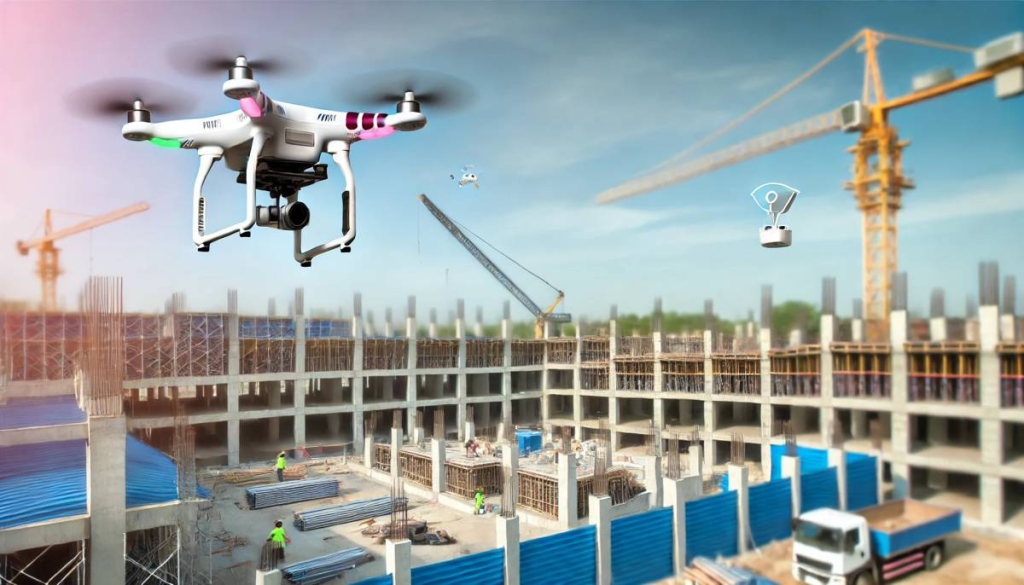
The integration of drone technology is revolutionizing the construction industry by improving real-time monitoring, optimizing safety inspections and enhancing sustainability. Sonoran Desert Institute (SDI), accredited by the Distance Education Accrediting Commission (DEAC), highlights the critical role UAVs play in streamlining workflows and reducing costs. Many Sonoran Desert Institute reviews emphasize the school’s strong focus on training students to implement advanced drone solutions across technical sectors, including construction. By equipping professionals with practical UAV skills, SDI supports smarter, safer and more efficient worksite management.
As the construction industry continues to embrace technological advancements, drones are emerging as a critical tool for improving efficiency, safety and cost management. Their ability to capture real-time aerial data and provide comprehensive site analysis enables construction teams to make informed decisions faster than ever before. By integrating drones into various phases of a project, companies can enhance worksite monitoring, optimize safety protocols and streamline planning processes.
Enhancing Worksite Monitoring with Real-Time Aerial Insights
One of the most significant advantages of drones in construction is their ability to provide real-time aerial monitoring. Traditional worksite monitoring methods, such as manual inspections and satellite imagery, are often time-consuming, costly and subject to delays. Drones, equipped with high-resolution cameras and sensors, offer a more efficient and accurate alternative.
- Progress Tracking: Drones provide up-to-date aerial images and 3D models of construction sites, allowing project managers to track progress and compare it with project timelines.
- Remote Site Access: Worksite supervisors can remotely monitor different areas of a project without being physically present, improving efficiency in large-scale or hazardous environments.
- Time-Lapse Documentation: Drone imagery can be used to create time-lapse videos, offering stakeholders a clear view of how a project evolves.
With real-time insights, construction teams can quickly identify potential delays, adjust schedules accordingly and optimize resource allocation for better workflow management.
Improving Safety with Automated Inspections
Safety remains a top priority in the construction industry, and drones are critical in reducing workplace hazards. Traditional safety inspections often require workers to navigate dangerous environments, increasing the risk of accidents. Drones eliminate these risks by conducting remote inspections from a safe distance.
- Hazard Identification: Drones equipped with thermal and infrared cameras can detect structural weaknesses, overheating equipment and potential fire hazards before they escalate into major safety concerns.
- Fall Risk Prevention: By capturing high-resolution images of elevated structures, drones eliminate the need for workers to climb scaffolding or cranes for inspections.
- Emergency Response: In case of accidents or hazardous events, drones can provide first responders with immediate aerial footage, improving emergency response efficiency.
By incorporating drones into safety protocols, construction companies can significantly reduce workplace injuries and enhance overall site security.
Optimizing Surveying and Mapping for Precision Planning
Surveying and mapping are essential components of any construction project, and drones are revolutionizing these processes by providing faster and more accurate data collection.
- Topographic Mapping: Drones equipped with Light Detection and Ranging (LiDAR) technology generate high-resolution maps and 3D models of the terrain, aiding in land development planning.
- Geospatial Data Collection: Drones capture precise site measurements with advanced GPS and photogrammetry, improving accuracy in design and execution.
- Volume Calculations: Drones can accurately measure stockpile volumes of construction materials, ensuring efficient inventory management.
These advancements in drone surveying and mapping contribute to better decision-making, reduced human error and improved construction planning.
Reducing Costs and Enhancing Project Sustainability
Cost efficiency and sustainability are crucial considerations in modern construction, and drones contribute to both by optimizing resources and minimizing waste.
- Labor and Equipment Savings: Drones reduce the need for extensive manual labor and expensive equipment by replacing traditional surveying and monitoring methods.
- Material Waste Reduction: Precise aerial assessments prevent the overuse of construction materials, reducing overall waste and improving sustainability efforts.
- Fuel and Energy Efficiency: Drones help lower fuel consumption and carbon emissions by reducing the need for ground vehicles and heavy machinery for inspections.
Drones are making construction projects more cost-effective and sustainable by minimizing expenses while promoting environmentally friendly practices.
Enhancing Communication and Collaboration
Effective communication is essential for the success of any construction project, and drones facilitate seamless collaboration between teams, stakeholders and clients.
- Real-Time Data Sharing: Drones provide up-to-date images and videos that can be instantly shared with all project stakeholders.
- Virtual Walkthroughs: Project managers can conduct virtual site inspections with clients and investors, keeping them informed without requiring physical visits.
- Improved Reporting: Aerial data enhances project reports, making it easier to convey progress updates and compliance documentation.
Drones foster better communication, ensuring that all parties involved in a construction project stay informed and aligned with project goals.
The Future of Drone Technology in Construction
As drone technology continues to evolve, new advancements are expanding their applications in construction:
- AI-Powered Analytics: Artificial intelligence enables drones to analyze site conditions, detect anomalies and provide predictive maintenance insights.
- Autonomous Flight: Drones with AI-driven autonomy can conduct routine inspections and surveys without human intervention.
- 5G Connectivity: High-speed networks improve real-time data transmission, enhancing drone capabilities in live monitoring and analysis.
- Integration with Building Information Modeling (BIM): Drones are being integrated with BIM systems to provide real-time updates on project development and structural integrity.
These innovations will further enhance efficiency, safety and sustainability in the construction industry.
Challenges and Considerations in Drone Adoption
Despite their many advantages, the widespread adoption of drones in construction comes with certain challenges:
- Regulatory Compliance: Many countries have strict regulations on commercial drone usage, requiring permits and operator certifications.
- Weather Limitations: Drones may be affected by adverse weather conditions such as high winds, rain or extreme temperatures.
- Initial Investment Costs: While drones offer long-term savings, the initial cost of purchasing high-end models and training personnel can be a barrier for some companies.
- Data Security Risks: The collection of sensitive construction site data raises concerns about cybersecurity and unauthorized access.
Addressing these challenges requires construction firms to work closely with regulatory bodies, invest in operator training and implement strong data security measures. Sonoran Desert Institute recognizes that by embracing these innovations, the construction sector is poised for a smarter, safer and more sustainable future.
Drones are transforming the construction industry by enhancing worksite monitoring, improving safety inspections, optimizing surveying and mapping and reducing costs. Their ability to provide real-time aerial insights and data-driven analytics is reshaping how projects are planned, managed and executed. As AI, automation and connectivity continue to advance, drones will play an increasingly vital role in the future of construction.
Embracing drone technology has become an essential component for companies striving to remain competitive. Those who integrate drones into their workflows will benefit from improved efficiency, reduced costs and a more sustainable approach to construction, ensuring long-term success in an evolving industry.